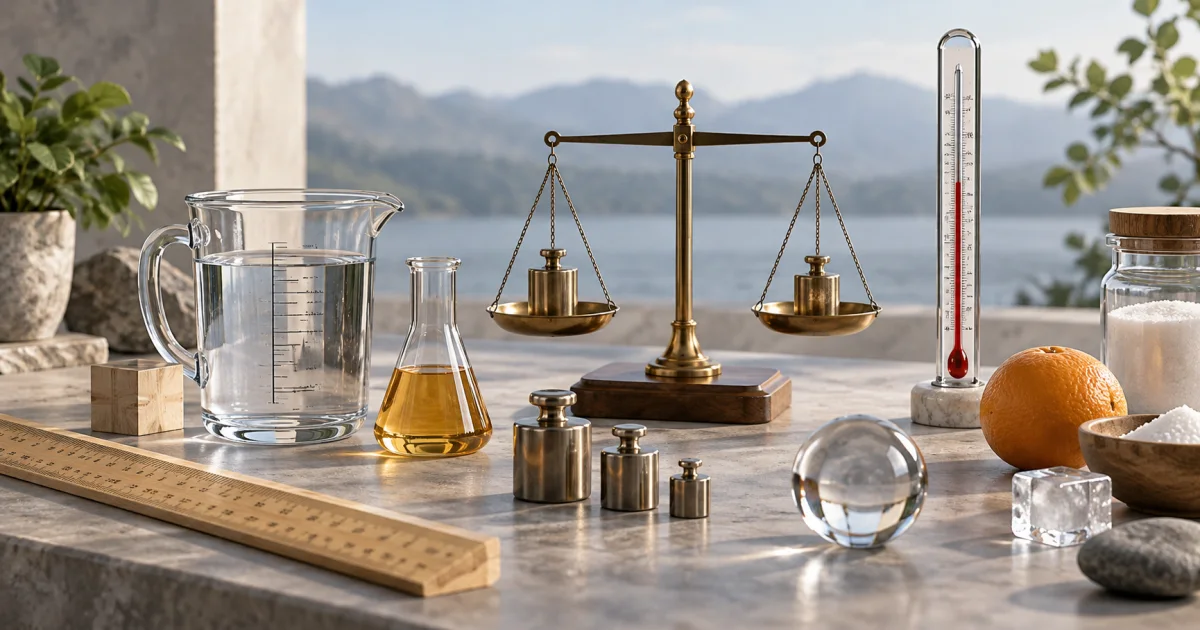
A unit converter is a tool that converts a measurement from one unit to another — meters to feet, kilograms to pounds, Celsius to Fahrenheit. To use one, enter a value and pick the units, and it returns the converted result. The FindUtils Unit Converter does this instantly in your browser — free, with no signup.
This guide explains what a unit converter covers, how to convert step by step, the measurement categories, and the conversion mistakes that produce a wrong answer.
What Is a Unit Converter and Why Use One?
A unit converter translates a measurement between units within the same category — distance to distance, mass to mass. It applies the exact conversion factor so the result is accurate.
Converting units by hand means remembering conversion factors (1 mile = 1.60934 km) and doing the arithmetic — both error-prone. Temperature is worse, because it needs a formula, not just multiplication. A converter removes the guesswork.
Use a unit converter when:
- You follow a recipe in different units — grams, ounces, cups, milliliters.
- You work with international measurements — metric in one source, imperial in another.
- You read specifications — a product, a part, a material spec in unfamiliar units.
- You travel — distance, temperature, and fuel in the local system.
- You do schoolwork or DIY projects that mix unit systems.
How to Convert Units Online
Converting a unit takes one step: enter the value and pick the units. The FindUtils Unit Converter returns the result instantly.
Step 1: Open the Unit Converter
Go to the FindUtils Unit Converter. It runs entirely in your browser.
Step 2: Choose the Measurement Category
Pick the category — length, weight, temperature, volume, area, speed, and so on. Units only convert within their own category.
Step 3: Enter the Value and Units
Enter the value, the unit it is in, and the unit you want. For example, 10 kilometers to miles.
Step 4: Read the Result
The converter returns the converted value instantly. For precise work, note how many decimal places you need.
Measurement Categories
A unit converter is organized by category — you convert within a category, not across.
| Category | Example units |
|---|---|
| Length / distance | meters, feet, miles, kilometers, inches |
| Weight / mass | grams, kilograms, pounds, ounces |
| Temperature | Celsius, Fahrenheit, Kelvin |
| Volume | liters, milliliters, gallons, cups |
| Area | square meters, square feet, acres, hectares |
| Speed | km/h, mph, m/s, knots |
Most categories convert by a simple multiplication factor — 1 km is always 0.621371 miles. Temperature is the exception: it uses formulas, not factors, because the scales have different zero points. Celsius to Fahrenheit is °F = °C × 9/5 + 32, not a single multiplier. This is why temperature is the most commonly mis-converted measurement, and why a converter is especially useful for it.
Unit Converter: Online Tool vs Other Methods
You can convert units mentally or by search, but a converter is fastest and most accurate.
| Method | Speed | Accuracy | Best for |
|---|---|---|---|
| FindUtils Unit Converter (Free) | Instant | Exact factors | Any conversion, all categories |
| Mental math | Slow | Error-prone | Rough estimates only |
| Search engine answer box | Fast | Good | One quick conversion |
| Calculator with memorized factors | Slow | Depends on memory | Not recommended |
The honest tradeoff: a search engine's answer box handles a single quick conversion fine. A dedicated converter wins when you do several conversions, need a category that is not a simple factor (like temperature), or want to switch units without retyping the query each time — all in one place, with exact factors.
Common Unit Conversion Mistakes and How to Fix Them
Mistake 1: Converting Temperature Like a Factor
Temperature scales have different zero points, so they need formulas. Fix it by using a converter for temperature rather than multiplying.
Mistake 2: Confusing Similar Units
US gallons and imperial gallons differ; ounces can be weight or volume. Fix it by selecting the exact unit, not just "gallon" or "ounce."
Mistake 3: Mixing Categories
You cannot convert weight to volume without knowing density. Fix it by converting within one category, and using density-aware tools when crossing.
Mistake 4: Rounding Too Early
Rounding mid-calculation compounds errors. Fix it by converting from the precise original value and rounding only the final result.
Mistake 5: Wrong Direction
Converting miles to km when you meant km to miles gives a number that looks plausible. Fix it by confirming the from-unit and to-unit before trusting the result.
Tools Used in This Guide
- Unit Converter — Convert length, weight, temperature, volume, and more
- Number Base Converter — Convert numbers between binary, hex, and decimal
- Aspect Ratio Calculator — Calculate and convert aspect ratios
- Timezone Converter — Convert times between time zones
FAQ
Q1: Is the unit converter free to use? A: Yes. The FindUtils Unit Converter is available without signup. It runs entirely in your browser.
Q2: When should I use this unit converter? A: It converts length, weight, temperature, volume, area, speed, and more with exact conversion factors, all client-side.
Q3: How do I convert metric to imperial units? A: Choose the measurement category, enter the metric value, select the metric unit as the source and the imperial unit as the target. The converter applies the exact factor and returns the result.
Q4: Why is temperature conversion different from other units?
A: Temperature scales have different zero points, so converting between them needs a formula, not a single multiplier. Celsius to Fahrenheit is °F = °C × 9/5 + 32. This makes temperature the most commonly mis-converted measurement.
Q5: Is it safe to convert units online? A: Use example input in Unit Converter. Check the output before you share it or use it in another application.
Q6: Why are there different gallons and ounces? A: US and imperial systems define some units differently — a US gallon and an imperial gallon are not the same size, and an ounce can measure weight or volume. Always select the exact unit you mean.
Q7: Can I convert weight to volume? A: Not directly. Weight and volume are different categories; converting between them requires knowing the substance's density. A unit converter works within a single category.
Next Steps
- Convert number bases with the Number Base Converter
- Calculate aspect ratios with the Aspect Ratio Calculator
- Convert time zones with the Timezone Converter
- Read the complete guide to online developer tools for more free utilities