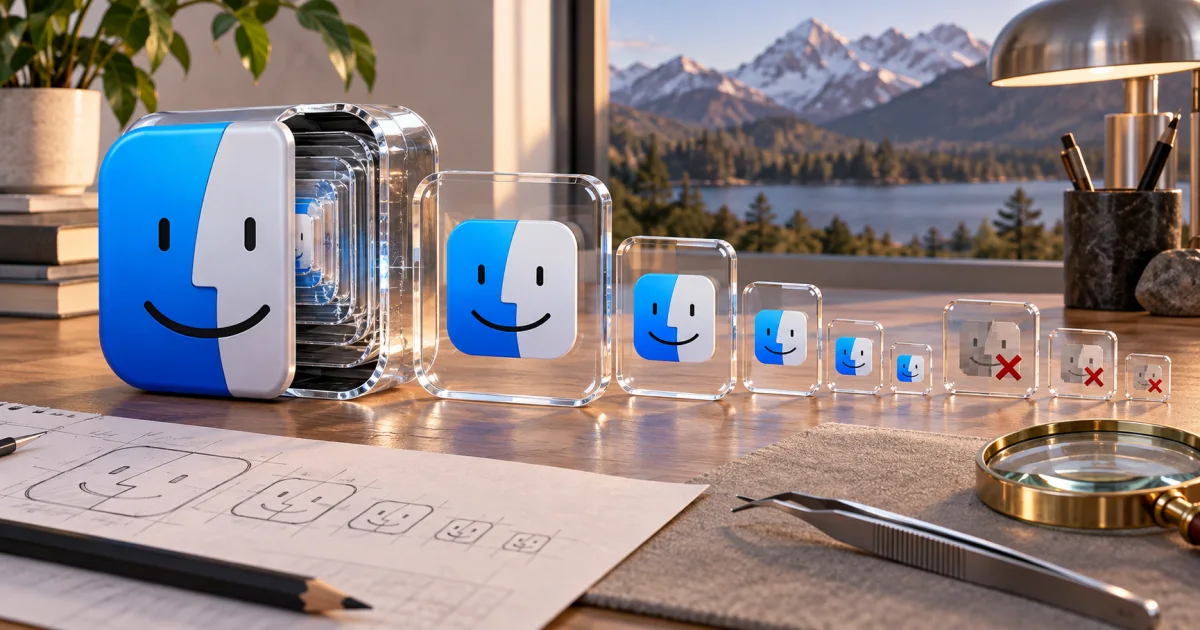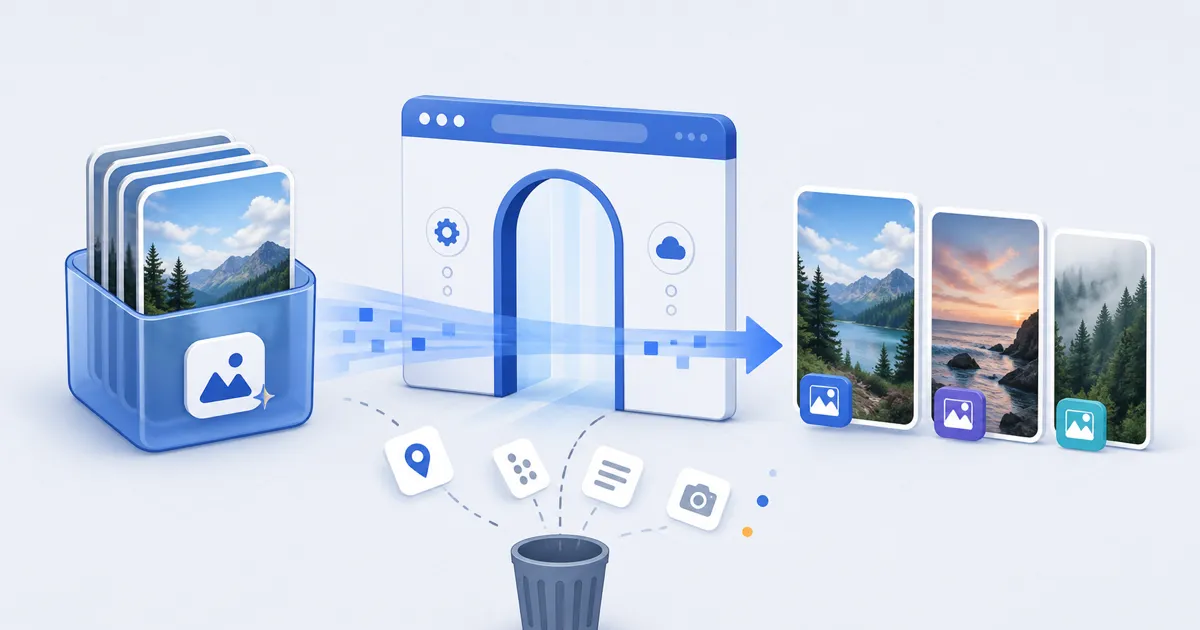
AVIF is an image format built on the AV1 video codec and published by the Alliance for Open Media. Browsers decode it natively since Chrome 85, Firefox 93, Safari 16.4 and Edge 121, but Windows Photos without its AV1 extension, many upload forms, and most print shops still want a JPG. AVIF to JPG converts an .avif file to JPG, PNG, or WebP inside your browser, and nothing is uploaded.
You right-clicked a picture on a website, chose "Save image as", and got IMG.avif. Almost nothing outside a browser will open it. Conversion time depends on the file, decoder, and available memory.
Tool: AVIF to JPG
When conversion helps
A saved web image can use AVIF even when the filename was not your choice. Conversion helps when the receiving system lists JPG, PNG, or WebP as an accepted format.
Check these requirements before you convert:
- The accepted file extensions and media types.
- The maximum upload size and image dimensions.
- Whether the destination needs transparency.
- Whether it needs a still image or animation.
AVIF can offer efficient image compression. The result depends on the image and encoder. A JPG copy is not always smaller than its AVIF source.
How to convert the file
- Open AVIF to JPG
- Drop one file or a handful
- Download the JPG, or a zip if you dropped several
That is the whole tool. Conversion starts the moment you drop. Quality defaults to 90. JPEG output can still lose detail at this setting; the slider runs from 40 to 100 and sits under a collapsed Options section. If you want PNG or WebP instead, open Options and pick one. A single file downloads directly. Two or more arrive as one avif-jpg.zip.
The tool first asks the browser to decode the file. If that fails, it loads a WebAssembly decoder based on libavif. A decoder failure still produces an error; the fallback does not establish support for every AVIF feature.
What happens to the metadata
An AVIF conversion draws decoded pixels onto a canvas. The converter does not copy the source EXIF, XMP, or GPS metadata into the new file. Keep the original when you need those records.
There is one important exception. A mislabeled file that already has the requested output media type can pass through unchanged. That path can retain its metadata. This converter is not a general metadata-removal tool.
What happens to transparency
AVIF supports transparency. JPG does not. A transparent area in the source becomes white in the JPG, and there is no way to recover it afterwards.
If the image has transparency you care about, open Options and choose PNG or WebP before you download. Both keep the alpha channel.
When to use the other converters
Image Format Converter handles JPEG, PNG, WebP, GIF, BMP, and ICO. It does not take AVIF as input, which is exactly why this page exists. If you already have a JPG and want WebP, use that page instead.
HEIC to JPG is the sibling for the .heic photos an iPhone writes. Same idea, different format, different decoder.
Animation, HDR, and decode limits
- An animated AVIF (an image sequence, usually
.avifsor carrying theavisbrand): you get the first frame only - HDR and high bit depth: the conversion uses a standard canvas output. It does not preserve the original HDR range or high bit depth. Colors can change, and unsupported files can fail
- A
.avifthat is actually a JPEG or PNG: it is passed through unchanged when it already matches the format you asked for, and otherwise reported as "not an AVIF image" rather than pretending
Files are converted one after another, so one failure does not stop the batch. The rest still convert and download, and the failures are listed by name.
Which format should you pick
- JPG is the default. Use it when the destination requires JPEG. It does not support transparency.
- PNG uses lossless compression for the decoded output pixels and supports transparency. It does not preserve the full AVIF source, metadata, animation, or HDR properties. The quality slider is ignored for PNG.
- WebP supports transparency. Use it when the destination accepts WebP, then compare the output size and detail.
If a portal rejects your JPG for being too large, run it through the Image Compressor afterwards.
Keep the original if you have room
Keep the source AVIF when you need its original metadata, animation, or color information. Treat the converted image as a separate delivery copy.
FAQ
Does this upload my files? The conversion processes the selected file locally. The page and decoder can make resource requests. Use a sample file when you inspect network activity.
Is there a file size limit? The page does not set an upload size limit. Decoded dimensions, canvas limits, and available memory can still prevent conversion.
Batch?
Yes. Drop many, download one avif-jpg.zip. If a file fails, the rest still download.
Can I convert to PNG or WebP? Yes, both, under Options. JPG is the default because that is what forms ask for. Pick PNG or WebP if the image has transparency.
Does it cost anything? No. No sign-up, no email, no watermark.
Sources
- AVIF specification: format structure, image sequences, and AV1 image coding.
- MDN image format guide: image capabilities and browser support.
- libavif: the AVIF library used by the fallback decoder.
The guide describes the current conversion path. Browser support and downstream upload rules can change.
Next
- Convert: AVIF to JPG
- iPhone photos: HEIC to JPG
- Other formats: Image Format Converter
- Shrink the JPG if a portal has a size cap: Image Compressor